IV. Execution context
Execution begins with context.
The same order behaves differently depending on the conditions that receive it: how much depth is resting, which way funding is pulled, whether flow has been one-sided, and what liquidity looks like on the other side of a bridge. Skilt keeps those conditions in one frame, before and while capital is deployed.
Skilt is not an execution venue, broker, custodian, or order-routing system. It is the context layer those decisions are made against.
Teams
Built for the desk, not the order ticket.
Each of these teams executes differently, and none of them uses Skilt to route an order. What they share is the question the platform answers: what am I executing into?
- 01Trading desks
- 02Market makers
- 03OTC teams
- 04Quantitative strategies
- 05Treasury and liquidity teams
01
Conditions
What the desk sees before the order.
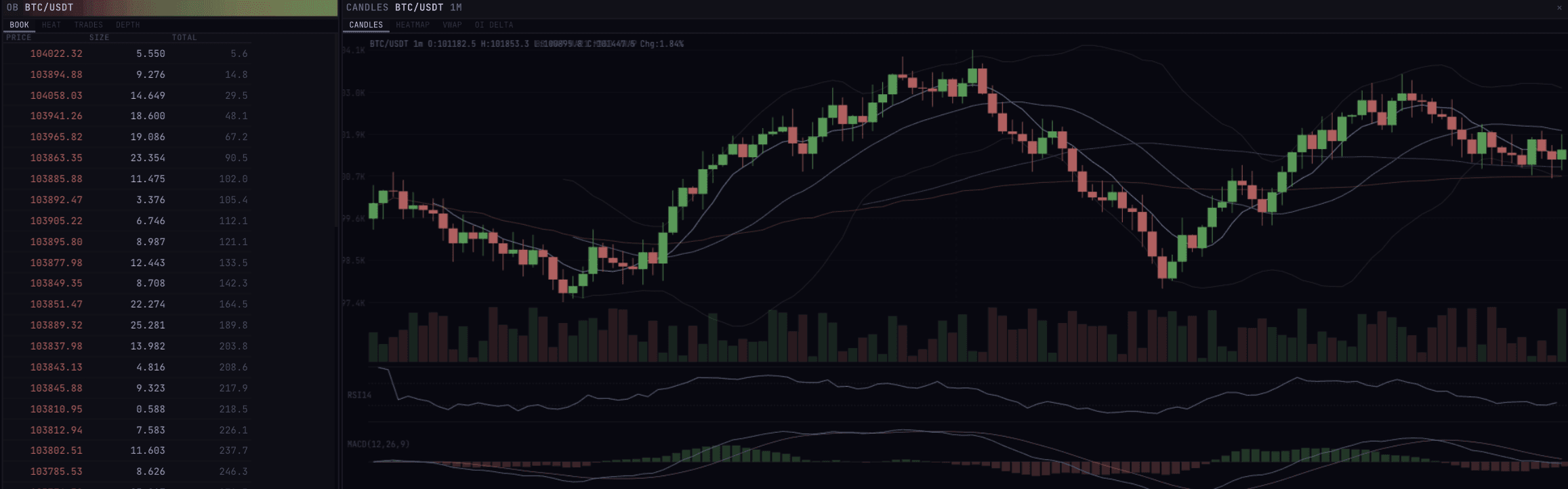
Execution-relevant conditions in decentralized markets are spread across venues, pools, and chains. Skilt assembles them so the pre-trade picture is complete, and so the same picture can be revisited afterward.
- Venue comparison
- Depth, spread, and listing state for the same instrument across venues.
- Depth
- Resting liquidity around the mid, and how quickly it is consumed or withdrawn.
- Funding and basis
- The carry and structural relationships that shape where positioning builds.
- Slippage context
- Recent realized movement for comparable size, as a reference for expectations.
- Flow imbalance
- Persistent one-directional flow that moves with or against the intended trade.
- Volatility
- The current regime, and how it compares to the recent past.
- Cross-chain liquidity
- Where the asset's liquidity actually sits across chains, and what moving between them costs.
02
Method
Context, not routing.
Skilt deliberately stops at the boundary of execution. It does not route orders, quote prices, hold assets, or interact with venues on a team's behalf. What it provides is the operating picture: continuous, connected, and sourced, for a desk's own execution systems and judgement act on.
Teams that benefit most are those whose edge depends on understanding structure: where liquidity is concentrated, how it moves, and what the market is doing beneath the price.
Access
Give the desk a complete pre-trade picture.
Request access and evaluate Skilt against your desk's own markets, venues, and instruments.